
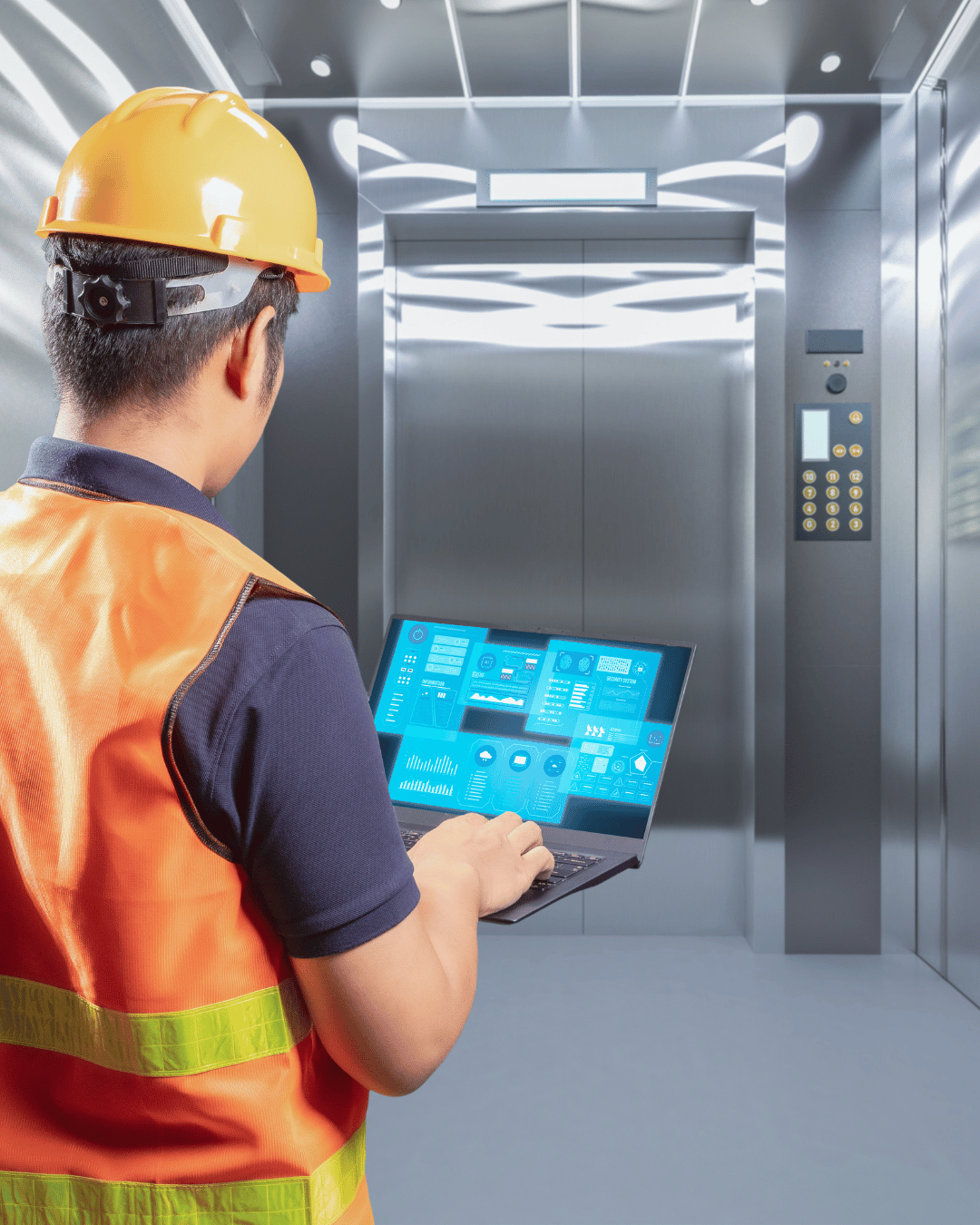
When a lift engineer arrives on site to undertake maintenance, repairs, inspections or other safety-critical activities, how can a building owner or facilities management team be confident that the individual is competent to carry out the work?
Is it enough for a contractor to confirm that their engineers are qualified?
Or should organisations expect documented, verifiable evidence demonstrating that each individual has the appropriate training, technical knowledge, practical experience and qualifications for the work they are undertaking?
This was the central issue addressed by Rise Compliance during a recent client engagement involving the verification of lift engineer competence.
Acting in the capacity of Authorising Engineer (AE) Lifts, Rise Compliance formally raised the importance of verifying contractor competence against recognised industry guidance, including BS 7255:2023 (Safe working on lifts) and the LEIA Competency Plan. The objective was straightforward, we wanted to help ensure that personnel working on the client’s lift installations were demonstrably competent and that appropriate documentary evidence was available to support their authorisation. However, the issue is that basic lift safety training is not the same as occupational competence. One of the most important distinctions highlighted during the engagement was the difference between basic lift safety competence and occupational competence in lift engineering.
These are related, but they are not interchangeable.
Basic lift safety competence concerns an individual’s understanding of the hazards associated with working on lifts, relevant safe working procedures and the precautions required to protect themselves and others.
Occupational competence goes further.
It involves the vocational qualifications, technical knowledge, practical skills and experience necessary to undertake specific lift engineering activities including installation, maintenance, repair and testing. An individual may have completed recognised basic lift safety training without necessarily being competent to undertake complex engineering tasks independently. This distinction is particularly important where engineers are expected to work unsupervised, enter lift wells or machinery spaces or carry out safety-critical activities.
Rise Compliance’s Approach was to suggest the client request evidence, not accept assurances. As part of its independent technical advisory role, Rise Compliance set out a clear, evidence-based approach to verifying competence.
The review focused on three key areas:
1. Verifying Recognised Lift Safety Qualifications
The first consideration was whether engineers could demonstrate appropriate basic lift safety competence. Where contractors relied upon EOR/202 or EOR/202N certification, Rise Compliance requested supporting evidence, including relevant qualification certificates or the exact qualification and unit codes, certificate numbers and sufficient information to allow verification. These qualifications are identified within LEIA industry guidance as suitable evidence of basic lift safety competence for relevant personnel. However, Rise Compliance also emphasised that holding such certification does not automatically establish competence to perform every lift engineering activity. The scope of work, additional qualifications, experience and supervision arrangements must also be considered.
2. Challenging Unverified Claims of Equivalent Qualifications
Not every competent lift engineer will necessarily hold the same qualification. The lift industry has a range of recognised qualification pathways, including legacy qualifications and alternative combinations of units. The LEIA Competency Plan recognises these different routes to competence. For this reason, Rise Compliance did not adopt a simplistic approach of accepting or rejecting engineers based solely on whether they held one particular certificate.
Instead, where alternative qualifications were presented as equivalent, the recommended approach was to establish the precise qualification and unit codes being relied upon. Whether the qualifications met the relevant competency requirements. Whether any claimed equivalence could be supported by published guidance or written confirmation from the relevant awarding organisation. Whether the contractor had assessed and documented the engineer’s competence for the specific activities they were authorised to undertake.
The principle was clear. Equivalence should be evidenced, not simply asserted. Where equivalence could not be established, Rise Compliance recommended obtaining written clarification before accepting the qualification as appropriate evidence.
3. Establishing an Auditable Contractor Competency Process
The third area concerned the client’s arrangements for managing contractor competence. Competence verification should not be treated as a one-off administrative exercise or a box-ticking activity. Building owners and organisations responsible for lift management should have a documented process for assessing the competence of contractors and the individuals they deploy. That process should consider relevant industry standards, qualification guidance, applicable health and safety legislation and the risks associated with the work being undertaken. Where applicable, such as in healthcare environments, additional sector-specific guidance including HTM 08-02 may also be relevant.
Rise Compliance recommended that appropriate documentary evidence be obtained and retained before engineers were authorised to undertake the relevant activities. This would help provide a clear audit trail demonstrating how competency decisions had been reached. Rise Compliance’s Recommendation was that no unverified competence for unsupervised work.
Following its assessment of the competency verification requirements, Rise Compliance established a clear formal position. Engineers whose competence cannot be satisfactorily evidenced should not be authorised to undertake unsupervised lift engineering activities until the relevant competency requirements have been verified. This was not about unnecessarily preventing engineers from working or excluding individuals with legitimate alternative qualifications. It was about ensuring that the level of competence matched the work being undertaken and that the client’s decisions could be justified through appropriate evidence.
Where engineers were still undergoing training or did not yet hold the necessary qualifications, supervised working arrangements could be considered, subject to appropriate assessment, documentation, risk controls and site safety procedures. This approach recognised that competence develops through training and experience while maintaining appropriate safeguards.
The Risk of Assuming Competence
For facilities managers, estates teams and duty holders, the consequences of failing to verify competence can be significant. Lift engineering frequently involves hazardous environments, complex equipment and safety-critical systems. If an incident occurs, organisations may need to demonstrate that they had appropriate arrangements in place to select competent contractors, verify the competence of personnel and manage foreseeable risks. Relying solely on verbal assurances or accepting unsupported qualification equivalence claims can make those arrangements difficult to demonstrate. A documented competency verification process helps organisations make better-informed decisions about who is permitted to work on their equipment and under what conditions. It also provides a stronger foundation for contractor oversight, accountability and continuous improvement.
The Value of an Independent Authorising Engineer (AE) Lifts
This case highlights an important aspect of the Authorising Engineer role. An AE Lifts should provide more than technical advice on the condition and operation of lift installations. The role can also provide independent scrutiny of the management systems, contractor arrangements and competency evidence that underpin safe lift operations.
In this engagement, Rise Compliance provided the client with a formal technical position, identifying the evidence that should be requested and the circumstances in which further verification or supervision would be appropriate.
The value of this approach lies in its independence.
Rather than relying solely on contractor declarations, the client was provided with a structured basis for challenging, reviewing and documenting competence. Effective compliance is not simply about having policies and certificates on file. It is about being able to demonstrate that the right people are undertaking the right work, with the right competence and controls in place.
Key Lessons for Building Owners and Facilities Managers
This case raises several important questions for any organisation responsible for managing lift installations.
- Can you demonstrate that the engineers attending your site have the appropriate qualifications and experience for their assigned duties?
- Are basic lift safety qualifications being confused with wider occupational competence?
- Are alternative or legacy qualifications being assessed against recognised competency pathways?
- Do you retain verifiable evidence of contractor competence?
- Are engineers undertaking unsupervised work only where their competence has been satisfactorily established?
- Would your competency records withstand scrutiny following a serious incident?
If the answer to any of these questions is unclear, it may be time to review your contractor competency management arrangements.
How Rise Compliance Can Help
At Rise Compliance, we believe that effective lift safety management requires independent technical oversight, proportionate challenge and evidence-based decision making. Our Authorising Engineer (AE) Lifts services support organisations in reviewing their lift management arrangements, assessing contractor competency evidence and identifying areas where additional assurance or improvement may be required.
By helping clients understand their responsibilities and implement robust verification processes, we support safer, more accountable management of lift installations.
Because when it comes to lift safety, competence should never be assumed. It should be demonstrated.
Contact Rise Compliance to discuss your lift safety management arrangements or the independent verification of contractor competence, contact our team.